 How-to
How Hydration Impacts Synovial Fluid and Joint Health
Last Updated: November 17, 2026
Quick Summary
Hydration supports synovial fluid health by maintaining the fluid balance the synovial membrane draws on, but studies do not show that drinking extra water thickens synovial fluid or directly relieves joint pain. Movement matters just as much, because joint motion pumps synovial fluid across the cartilage.
- Synovial fluid lubricates cartilage, absorbs shock, delivers nutrients, and removes waste from joints.
- Cartilage has no blood supply and relies on joint movement to drive fluid in and out.
- Dehydration can contribute to stiffness and cramping but is rarely the whole story.
- Move hourly with short walks or 10 slow knee and shoulder circles.
- Strength train two to three times a week to support joints and fluid movement.
Table of Contents
- What Synovial Fluid Does for Your Joints
- How Hydration Impacts Synovial Fluid Health
- Can Dehydration Cause Joint and Muscle Pain?
- Does Drinking Water Help Joint Pain?
- How to Increase Synovial Fluid Naturally
- Electrolytes and Joint Pain: Getting Fluid Balance Right
- Hydration Habits for Exercise and Hot Weather
- When Joint Symptoms Need a Professional Assessment
- Frequently Asked Questions
What Synovial Fluid Does for Your Joints
Synovial fluid is the thick, egg-white-like liquid that fills the capsule around each joint and keeps it moving smoothly. This guide explains what the impact of hydration on synovial fluid health actually looks like, what the science can and cannot prove, and how to build habits that support your joints.
Here is the honest starting point: research on hydration and joint fluid is thinner than most headlines suggest. A peer-reviewed analysis of cartilage hydration and subchondral bone density looked at how water content affects cartilage mechanics. It did not measure whether drinking more water improves joint pain. That distinction matters, and we will return to it.
The Four Jobs of Joint Fluid
Joint fluid does more than lubricate. It handles four separate tasks:
- Lubrication. It coats the cartilage surfaces so they glide instead of grinding.
- Shock absorption. It spreads load across the joint during impact.
- Nutrient delivery. Cartilage has no blood supply, so it gets oxygen and nutrients from joint fluid.
- Waste removal. Movement pumps fluid in and out, carrying waste products away.
That third and fourth job are why joint movement matters as much as water intake. Cartilage is fed by compression and release, like a sponge.
Why Cartilage Needs Water to Stay Resilient
Articular cartilage is mostly water. That water content gives it the ability to deform under load and spring back. The research on cartilage hydration suggests that water in cartilage plays a role in how stress is redistributed across the joint surface. Less water may change how that load is handled.
So hydration supports the environment cartilage lives in. It is not a repair switch.
How Hydration Impacts Synovial Fluid Health
The impact of hydration on synovial fluid health comes down to fluid balance, but the mechanism is more specific than "water in, lubrication out." Synovial fluid is made from components that include plasma-derived fluid, hyaluronic acid, and lubricin.
That is the established physiology. What human studies do not show is that drinking extra water above normal needs measurably thickens synovial fluid or directly relieves joint pain. Most of the strong evidence on cartilage water content comes from bench and imaging research, not from trials of water intake and joint symptoms.
What Fluid Balance Means for Joint Lubrication
Think of it as a chain with several links, not a single switch:
- Lower fluid intake leads to mild dehydration
- Mild dehydration reduces plasma volume and overall fluid balance
- Reduced fluid balance may affect the volume and consistency of synovial fluid the membrane can maintain
- Poorer lubrication can increase friction and stiffness
- Stiffness reduces movement, and movement is what circulates joint fluid
That last link is the one people miss. Synovial fluid is not static. It thins with rest and thickens with activity, and joint movement is what pumps it across the cartilage surface. A desk-bound afternoon makes knees feel stiff partly because the fluid has been sitting, not only because you are short on water. This is why the practical answer is almost always hydration plus movement, not hydration alone.
Beyond Lubrication: The Other Jobs Fluid Balance Affects
Synovial fluid also handles nutrient delivery and waste removal. Articular cartilage is avascular, meaning it has no blood supply of its own.
Watch out: it is easy to overstate this. The body defends joint function and prioritizes vital organs when water is short, so mild dehydration does not mean your joints run dry. The realistic effect is a stiffer, slower-feeling joint, not a dry one.
For a deeper look at whole-body hydration and the factors that shape intake, the review of water, hydration and health covers intake patterns and individual variation.
The chain from fluid intake to joint stiffness runs through several links, not a single switch.
Stage | What Happens |
|---|---|
Lower fluid intake | Leads to mild dehydration |
Mild dehydration | Reduces plasma volume and overall fluid balance |
Reduced fluid balance | May affect volume and consistency of synovial fluid |
Poorer lubrication | Can increase friction and stiffness |
Stiffness | Reduces movement, which circulates joint fluid |
Can Dehydration Cause Joint and Muscle Pain?
Dehydration can contribute to joint stiffness and muscle cramping, but it is rarely the whole story. Muscle pain from dehydration usually shows up with heat, exertion, and heavy sweating. Joint pain is more often linked to cartilage wear, inflammation, injury, or arthritis.
Watch out: blaming every ache on low water intake can delay a real diagnosis. If a joint is swollen, hot, or locking, that is not a hydration problem.
Does Drinking Water Help Joint Pain?
Drinking water supports joint health, but it is not a proven stand-alone pain treatment. That verdict is worth unpacking, because most articles either oversell water as a joint cure or dismiss it entirely, and neither matches the evidence.
Here is what the research supports. Dehydration is well established to impair physical performance, cognitive function, and recovery, and it can contribute to stiffness and muscle cramping, especially with heat and exertion. Cartilage water content is established to affect how cartilage handles load.
So the practical position is this: water is a supporting habit, not a treatment. Because hydration supports joint health without replacing targeted care, persistent knee stiffness still calls for practical strategies that address its effects on daily movement, including those associated with inflammation.
How Much Water, and Why One Number Does Not Fit Everyone
A common mistake is treating a single water target as universal. Needs vary with body size, activity level, heat, sweat rate, pregnancy, and medical conditions.
Watch out: thirst signals weaken with age, so older adults should not rely on thirst alone and may need scheduled reminders. People with heart, kidney, or liver conditions, and those on fluid-restricting medications, should follow their clinician's guidance rather than a general target.
The Overhydration Risk Most Articles Skip
More water is not always better. Drinking far beyond thirst, especially during endurance events, can dilute blood sodium and cause exercise-associated hyponatremia, which is genuinely dangerous. The goal is balance, not volume. For most people eating regular meals, plain water is enough; long training sessions, heavy sweating, and hot weather are when electrolytes and food-based fluid sources earn their place.
What to Do Instead of Relying on Water Alone
If joint pain is your concern, pair hydration with the habits that have stronger evidence behind them: strength training two to three times a week, daily movement to circulate joint fluid, sleep, and professional assessment when symptoms persist. Our guide to strength exercises for knee stability covers safe starting points, and our article on managing chronic pain without surgery walks through the non-surgical options.
At Total Body Works Personal Training, we build private, distraction-free sessions around your joints, your goals, and your history. Our active aging programs combine personalized strength work with therapies like ARPwave and HBOT to support recovery and mobility. We do not promise a cure. We do promise a plan built for your body and a clinician's referral when symptoms call for one.
How to Increase Synovial Fluid Naturally
Movement is the most reliable way to support synovial fluid production and circulation. Every time you bend and straighten a joint, you pump fluid across the cartilage. Pair that with steady hydration and you cover both sides of the equation.
- Move hourly. Short walks or 10 slow knee and shoulder circles.
- Strength train two to three times a week. Strong muscles support the joint and drive fluid movement. Our guide to strength exercises for knee stability covers safe starting points.
- Drink with meals and around training. Small, frequent amounts beat one large bottle.
- Warm up before loading a joint. Cold, stiff tissue tolerates less.
- Keep a water bottle visible. Cues work better than willpower.
Electrolytes and Joint Pain: Getting Fluid Balance Right
Electrolytes help your body hold and use the water you drink. Sodium, potassium, and magnesium support fluid balance, nerve signaling, and muscle contraction. For most people eating regular meals, plain water is enough. Long training sessions, heavy sweating, and hot weather change that.
A common mistake is overcorrecting with high-sugar sports drinks. Another is overhydration: drinking far beyond thirst can dilute sodium levels, which is genuinely risky. Balance is the goal, not volume.
Hydration Habits for Exercise and Hot Weather
Sweat losses rise fast with heat and effort, so plan fluid around your session rather than reacting afterward. Drink before you start, sip during, and rehydrate after with water and a normal meal.
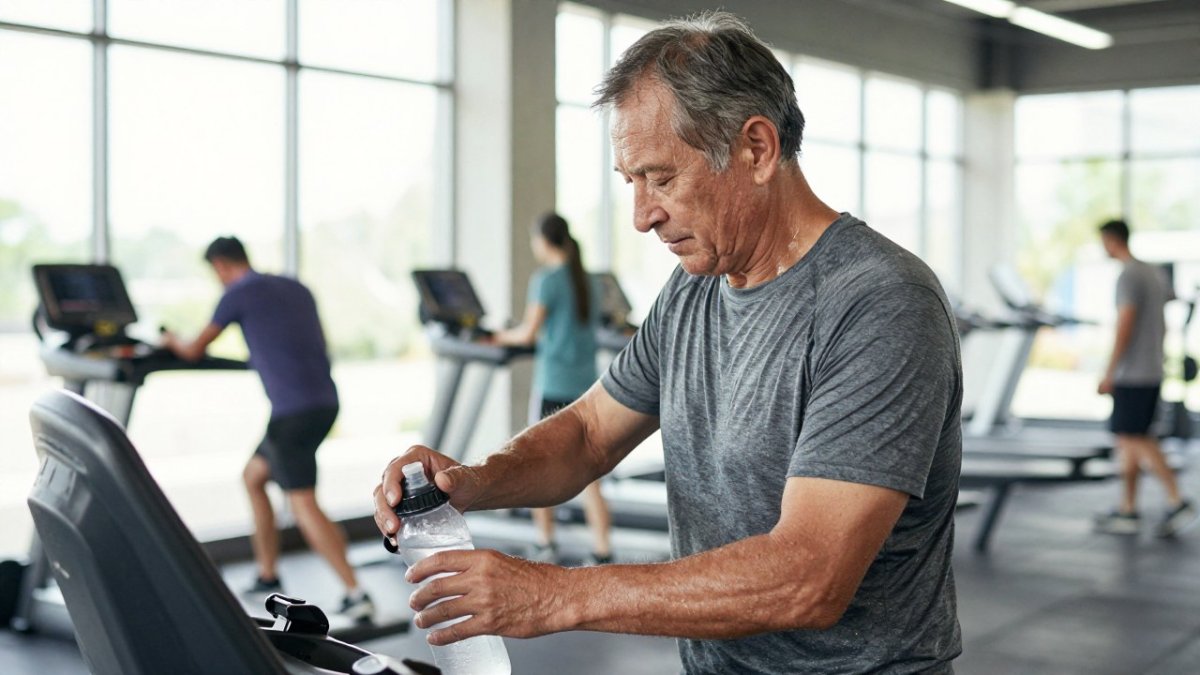
Older adults need a specific note. Thirst signals weaken with age, so waiting to feel thirsty is unreliable. Set reminders. For a broader look at recovery routines, see our guide to nutrition, recovery, and lifestyle habits.
When Joint Symptoms Need a Professional Assessment
Some joint symptoms deserve a professional look rather than another glass of water. Seek assessment if you notice:
- Swelling, warmth, or redness around a joint
- Pain that wakes you at night or persists at rest
- Sudden loss of range of motion or a locking joint
- Symptoms after an injury or fall
- Joint pain alongside fever
These signs can point to arthritis, injury, or inflammation, and each needs proper evaluation. Readers who want to know whether hands-on care fits their situation can read about massage therapy for arthritis pain, and those interested in recovery support can review hyperbaric oxygen therapy.
At Total Body Works Personal Training, we build private, distraction-free sessions around your joints, your goals, and your history. Our active aging programs combine personalized strength work with therapies like ARPwave and HBOT to support recovery and mobility. We do not promise a cure.
Joint stiffness rarely has one cause, and water alone will not fix it. If you want a plan that pairs smart hydration habits with strength work, mobility, and recovery therapies tailored to you, our team can help.
Frequently Asked Questions
Does drinking water increase synovial fluid?
There is no strong evidence that drinking more water directly increases synovial fluid volume. Synovial fluid is produced by the joint lining and its composition is tightly regulated by the body. What hydration does support is overall fluid balance, which helps cartilage retain its water content and keeps joint tissues functioning normally. The practical takeaway is to stay adequately hydrated rather than to drink extra water expecting a measurable jump in joint fluid. Anyone with persistent joint swelling or pain should have it assessed by a clinician.
Can dehydration cause joint and muscle pain?
Dehydration is associated with stiffness, cramping, and reduced exercise tolerance, and some people report joint and muscle discomfort when they are underhydrated. The evidence linking dehydration directly to joint pain is limited and largely indirect, so it is more accurate to say dehydration may contribute to discomfort rather than cause it. If you notice joint pain that appears alongside dark urine, dizziness, or heavy sweating, increase fluids and electrolytes and see a professional if symptoms persist.
How can I increase synovial fluid naturally?
Regular joint movement is the most reliable way to support synovial fluid circulation, because cartilage relies on loading and unloading to move nutrients and fluid through the joint. Combine consistent low-impact activity, adequate hydration, and strength work that loads the joints through a comfortable range. Electrolytes from food and fluids help maintain fluid balance during sweaty exercise. No single drink or supplement has been shown to reliably boost synovial fluid, so treat marketing claims with caution.
Do electrolytes help with joint pain?
Electrolytes support fluid balance, nerve function, and muscle contraction, which matters during long or hot training sessions. They do not treat joint pain directly, and there is no evidence that electrolyte drinks repair cartilage or increase synovial fluid. For most people training under an hour, water and normal meals cover electrolyte needs. For longer sessions or heavy sweating, a balanced electrolyte source can help you avoid the fatigue and cramping that come with fluid loss.