 How-to
Why Your Shoulder Hurts Lifting Weights Overhead
Last Updated: November 22, 2026
Quick Summary
Your shoulder hurts lifting overhead usually because of rotator cuff irritation, shoulder impingement, or poor overhead mechanics that pinch tendons between the shoulder blade and upper arm. When your shoulder hurts lifting, the fix is load management first: cut pressing volume and swap painful overhead work for neutral-grip or landmine presses while you build stability.
- Normal soreness sits in the muscle belly and fades within a day or two.
- See a professional if shoulder pain persists beyond a few weeks or you feel weakness.
- Start corrective work with bodyweight or band drills for the first one to two weeks.
- Add light dumbbells of 2-5 lb to the same drills during weeks three and four.
- A forward-leaning dip shifts the bar path out front and loads the front of the shoulder.
Table of Contents
- Common Causes of Shoulder Pain When Raising Arm Overhead
- How to Tell Soreness From a Real Shoulder Injury
- Step-by-Step Guide to Proper Overhead Lifting Form
- Corrective Exercises for Shoulder Stability and Mobility
- How to Get Rid of Shoulder Pain From Lifting Weights
- Gym Shoulder Injury Recovery Time and Return-to-Lifting Plan
- When to Seek Professional Evaluation at Total Body Works
- Frequently Asked Questions
Common Causes of Shoulder Pain When Raising Arm Overhead
If your shoulder hurts lifting weights overhead, or your shoulder hurts lifting in general, you are not alone, and the cause is usually mechanical rather than mysterious. For a safe strength-training approach to a shoulder injury, see safe strength training with a shoulder injury. Shoulder complaints during lifting often trace back to a handful of common patterns. A 2024 scoping review in PubMed Central's review of weightlifting shoulder injuries examined the incidence, types, and risk factors of shoulder injuries tied to weightlifting. The review confirms these injuries are common enough to warrant their own body of research.
The shoulder is a ball-and-socket joint with many motion. That mobility comes at a cost: less stability than a hip joint. When you press a bar overhead, the joint, its tendons, and the muscles around the shoulder blade all share the load. If any part of that chain is weak or restricted, pain shows up.
Rotator Cuff Irritation and Tendinopathy
The rotator cuff is a group of four muscles and tendons that stabilize the shoulder. Repetitive pressing can irritate these tendons, a condition called tendinopathy. It typically feels like a dull ache on the front or side of the shoulder, worse when you reach overhead or sleep on that side.
Shoulder Impingement and Overhead Mechanics
Shoulder impingement happens when the rotator cuff tendons get pinched between the shoulder blade and the upper arm bone. It often comes from poor overhead mechanics, limited shoulder mobility, or muscle imbalance. The result is a sharp pinch at a specific point in the press.
How to Tell Soreness From a Real Shoulder Injury
Normal soreness shows up in the muscle belly, feels symmetrical, and fades within a day or two. A real injury is different. Watch for these signs:
- Pain that lasts more than 48 hours
- Sharp pain at a specific point in the movement
- Weakness or a feeling the arm might give out
- Pain that wakes you at night
- Swelling, or pain at rest
If you are unsure whether exercise is safe, our guide on safe exercise routines for shoulder injuries walks through what to check before you train again.
Step-by-Step Guide to Proper Overhead Lifting Form
Good form spreads load across the whole shoulder complex, but "good form" looks different depending on which overhead lift you are doing and where in the movement your shoulder complains. Here is how the most common overhead lifts are typically performed, with pain-aware substitutions for each.
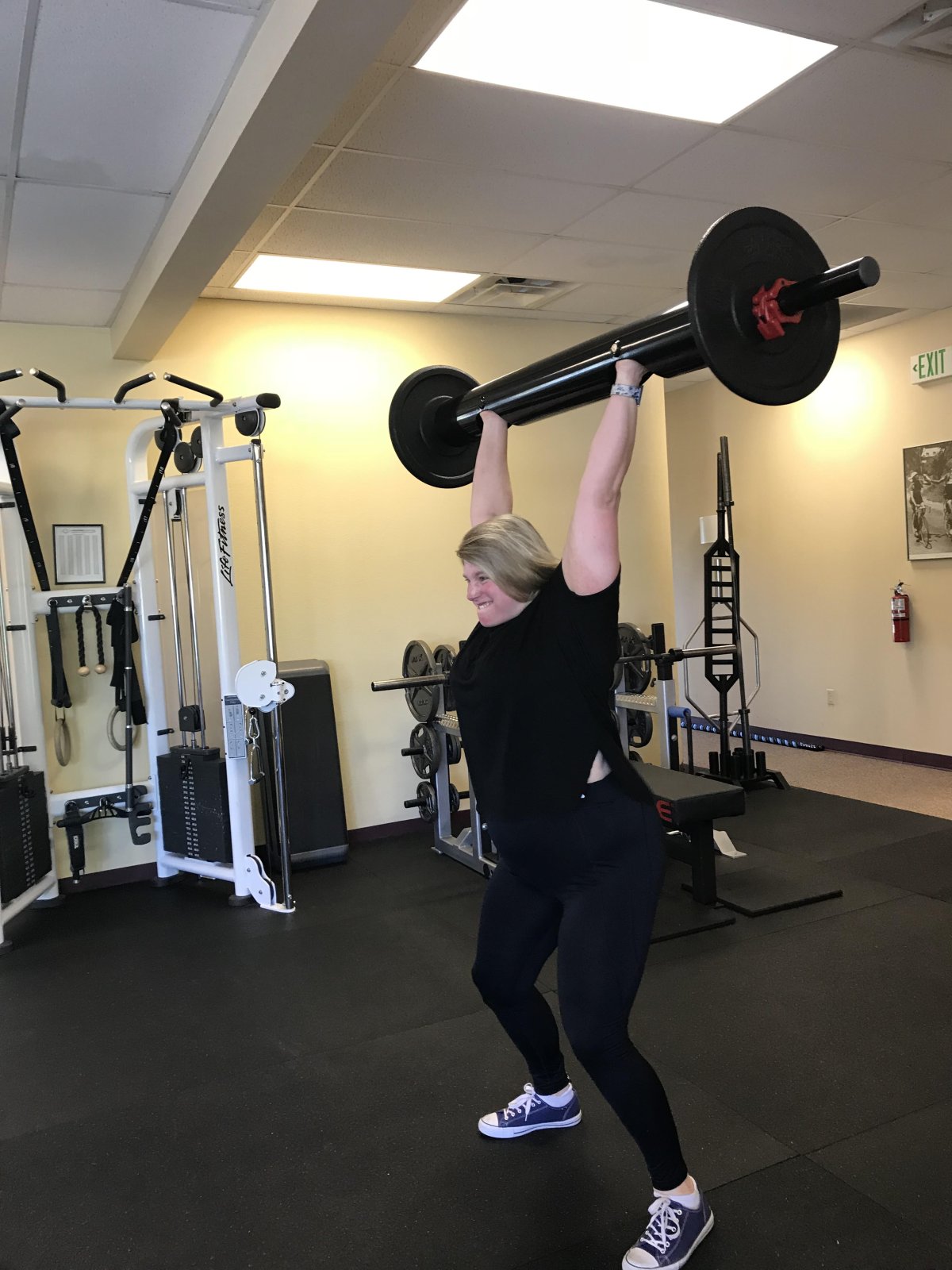
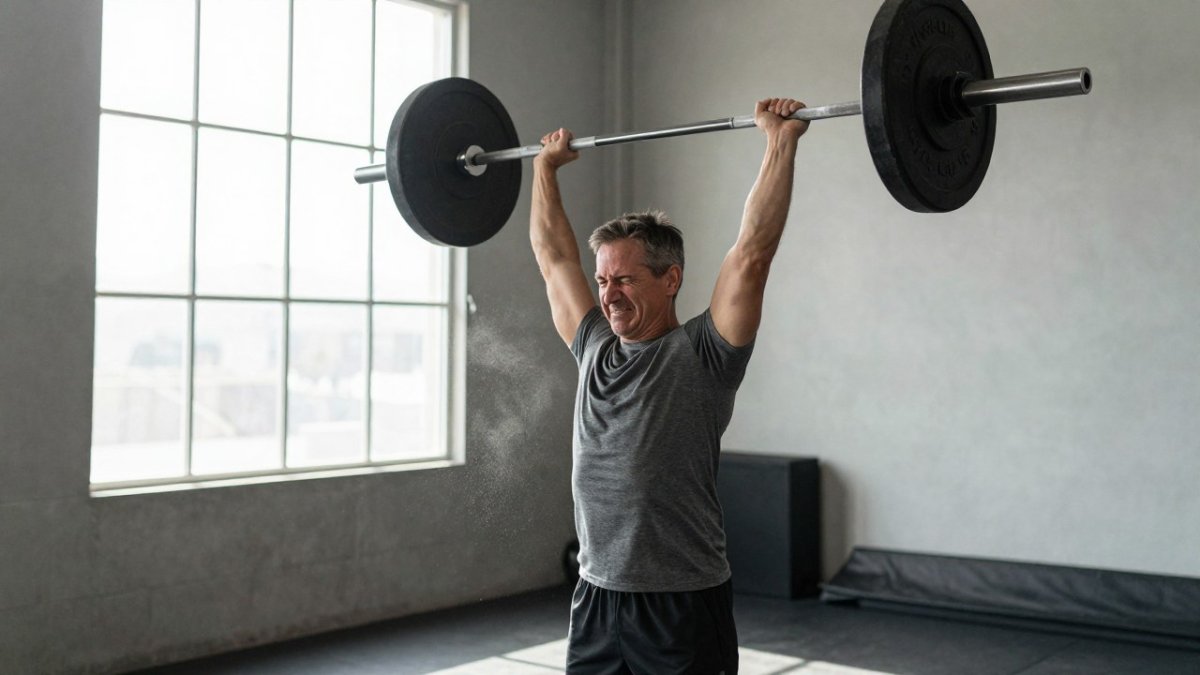
Barbell Overhead Press
- Stand with feet shoulder-width apart, mid-foot under the bar
- Squeeze your glutes and brace your core before you unrack
- Set the bar on your upper chest with elbows slightly in front of the bar
- Keep your ribs down, not flared, as the bar passes your face
- Press in a straight line over your mid-foot and finish with the bar over your ears
- Let your shoulder blades rotate up as the bar rises, then lower under control
Watch out: pressing with a flared ribcage and no core brace pushes the shoulder into a poor position at the top and is one of the most common reasons lifters feel a pinch at lockout.
If the barbell press reproduces pain at the top, switch to a landmine press (one end of the bar anchored, pressing at an angle) or a neutral-grip dumbbell press (palms facing each other). Both keep the shoulder in a less impinged position while you rebuild tolerance. As these pressing variations let you rebuild tolerance without abandoning strength work, Tiger Fitness can help you keep muscle recovery in view while your shoulder adapts.
Dumbbell Overhead Press
- Sit or stand with dumbbells at shoulder height, palms facing forward or neutral
- Keep wrists stacked over elbows at the start
- Press up and slightly in, finishing with biceps near your ears
- Lower until your elbows are just below shoulder height, not into a deep stretch
Watch out: letting the elbows drift far behind the torso at the bottom increases anterior shoulder strain. Stop the descent where you can still control the weight.
If pain shows up at the bottom of the dumbbell press, try an Arnold press with a lighter load or a half-kneeling single-arm press to reduce total shoulder demand.
Push Press and Overhead Variations
- Dip straight down by bending the knees, keeping the torso upright
- Drive through the legs and let the bar travel in a straight line
- Time the arm lockout with the leg drive so the shoulder does not absorb the whole load
Watch out: a forward-leaning dip shifts the bar path out front and loads the front of the shoulder. Keep the dip vertical.
If push presses hurt but strict presses do not, the issue is often the dip-and-drive timing rather than shoulder capacity. Swap to strict pressing while you clean up the dip.
Common Technique Faults That Drive Shoulder Pain
- Elbows flared too wide at the start: narrow the grip or use a neutral grip
- Ribs flared at lockout: brace the core and keep the ribcage stacked over the pelvis
- Bar path out front: press over the mid-foot, not over the toes
- No scapular upward rotation: let the shoulder blades move as the arm goes overhead instead of pinning them down
If you cannot find a pain-free overhead variation, that is useful information: it tells you the shoulder needs a period of load reduction and stability work before overhead pressing resumes. Our functional movement screen can identify which fault is driving your pain so you are not guessing between variations.
Corrective Exercises for Shoulder Stability and Mobility
Stability work fixes the weak links that cause pain, but the right drill depends on what your shoulder is doing wrong. Most lifters do not need all of these; they need the two or three that match their fault. Use the symptom-based guide below to pick a starting point, then progress load and range only when the drill stays pain-free.
If Pain Is at the Front of the Shoulder During Pressing
This pattern often points to anterior cuff irritation or poor scapular control. Start with:
- Band external rotations: 2 sets of 15 per side, elbow pinned to your side
- Face pulls: 3 sets of 12, pulling toward the forehead and squeezing the shoulder blades
- Prone Y raises: 2 sets of 10, thumbs up, lifting only to shoulder height
Progress by adding a light dumbbell to the Y raise once bodyweight reps are pain-free for a week.
If Pain Is at the Top or Side of the Shoulder at Lockout
This pattern often points to impingement or limited scapular upward rotation. Start with:
- Wall slides: 2 sets of 10, forearms on the wall, sliding up only as far as pain-free
- Scapular push-ups: 2 sets of 10, small range, moving only the shoulder blades
- Thoracic rotations: 8 per side, open-book position on the floor
Watch out: forcing wall slides into a painful range reinforces the same pinch you are trying to fix. Stop at the first point of pain and work that range over weeks, not days.
If Pain Is at the Back of the Shoulder or Deep in the Joint
This pattern can reflect posterior cuff strain or a mobility restriction in the thoracic spine. Start with:
- Sleeper stretch (gentle): 2 sets of 20 seconds per side, only to a mild stretch
- Band pull-aparts: 2 sets of 15, squeezing the shoulder blades at the end
- Side-lying external rotations: 2 sets of 12 per side with a light dumbbell
How to Progress Corrective Work
- Week 1-2: bodyweight or band only, pain-free range
- Week 3-4: add light dumbbells (2-5 lb) to the same drills
- Week 5+: integrate the pattern into a pressing warm-up rather than a separate session
A common pattern is that lifters feel better in two to three weeks but then return to the same pressing volume that caused the problem. Corrective work buys tolerance; load management keeps it. A functional movement screen can pinpoint which of these your shoulder actually needs, so you are not guessing.
How to Get Rid of Shoulder Pain From Lifting Weights
The fastest path is load management, not total rest. Cut pressing volume and swap painful overhead work for neutral-grip or landmine presses. Track your training volume so you can see what triggered the pain. Most lifters improve by reducing load, fixing mechanics, and building stability in that order.
Gym Shoulder Injury Recovery Time and Return-to-Lifting Plan
Recovery time depends on the injury. Mild tendinopathy often settles in weeks with load management. More serious injuries take longer and need a clinician's input. A gradual return looks like this:
Phase | What You Do | Typical Timeline |
|---|---|---|
Calm it down | Reduce pressing, keep pain-free work | 1-2 weeks |
Rebuild | Stability and mobility drills | 2-4 weeks |
Reload | Light pressing, perfect form | 2-4 weeks |
Return | Progressive overload | Ongoing |
When you are ready to restart, our guide on how to start training with an injury lays out a safe progression.
When to Seek Professional Evaluation at Total Body Works
See a professional if pain persists beyond a few weeks, if you feel weakness, or if pain returns every time you press. At Total Body Works Personal Training, we offer private, one-on-one sessions, ARPwave therapy, and HBOT therapy to support recovery. We also use movement screening to find compensation patterns that keep injuries coming back. Learn more about why recurring injuries happen and how we address them.
Your shoulder does not have to keep hurting every time you press. Get an assessment that looks at your whole body, not just the sore joint. Total Body Works Personal Training offers distraction-free private training, ARPwave and HBOT therapies, and active aging programs built around your goals. Call 719-414-0482 to schedule your evaluation.
Frequently Asked Questions
Why does my shoulder hurt when I raise it overhead?
Pain when raising your arm overhead often points to irritation of the rotator cuff tendons or shoulder impingement, where the joint's structures get compressed during the motion. Limited overhead mobility, poor scapular control, and muscle imbalances can all contribute. Research on shoulder injury risks in weightlifting notes that these factors deserve individual assessment. If the pain is sharp, persistent, or limits daily activity, get a professional evaluation rather than pushing through it.
How can I tell whether shoulder pain is a muscle strain or a rotator cuff problem?
Muscle soreness typically appears 24 to 48 hours after training, feels diffuse, and eases with light movement. Rotator cuff involvement often produces sharper pain with specific motions like overhead pressing or reaching behind your back, and may come with weakness. Shoulder pain can sometimes have causes outside the shoulder itself, so a full-body movement assessment may be useful. Only a qualified professional can confirm the difference.
Can I keep lifting weights with shoulder pain?
It depends on the type and severity of the pain. Mild soreness that improves with warm-up often allows continued training with reduced load and adjusted range of motion. Sharp pain, pain that worsens during a set, or pain that lingers into the next day signals you should modify or pause overhead work. Exercise modification and load management are standard first steps. If symptoms persist beyond a week or two, seek a professional evaluation before returning to full overhead lifting.
What is a typical gym shoulder injury recovery time?
Recovery time varies widely by injury type and severity. Minor irritation may settle within one to three weeks with load management and corrective work, while more significant rotator cuff issues can take several months of structured rehabilitation. Shoulder injuries in weightlifting vary in type and risk factors, which is why timelines are individual. A physical therapist or qualified trainer can set realistic milestones based on your assessment and progress.