 How-to
How to Manage Chronic Pain Without Surgery
Last Updated: November 7, 2026
Quick Summary
You can manage chronic pain without surgery by building a function-first plan that combines movement, hands-on care, and mind-body strategies. Structured exercise and physical therapy have the strongest evidence, while pacing, heat or cold, massage, and acupuncture can support your progress. Start with two or three gentle exercises and adjust every two weeks.
- Write down your baseline function, then measure progress against it rather than an arbitrary pain number.
- Exercise has the strongest evidence, with support from low-level laser therapy, spinal manipulation, massage, yoga, and acupuncture.
- Try any approach for four to six weeks before deciding whether it is helping you.
- Pacing means breaking tasks into 15- to 20-minute blocks and stopping before pain peaks.
- A flare-up protocol should drop volume by half rather than stopping activity entirely.
Table of Contents
- Start With a Function-First Assessment
- Chronic Pain Management Without Medication: What the Evidence Supports
- Chronic Pain Physical Therapy Exercises You Can Start This Week
- Chronic Pain Pacing and Activity Management: Doing More Without the Crash
- How to Control Pain Mentally With Mind-Body Techniques
- Heat, Cold, Massage, and Acupuncture: Where Each One Fits
- Build Your Individualized Plan and Flare-Up Protocol
- Book a Private Assessment to Build Your Pain Plan
- Frequently Asked Questions
Start With a Function-First Assessment
Learning how to manage chronic pain without surgery starts with one question: what can you not do right now that you want to do? Chronic pain is persistent discomfort lasting beyond the normal healing window, and the goal of non-surgical care is not a zero on a pain scale. It is better function.
A good plan is built around that idea, starting with what your body can currently do and working forward.
A function-first assessment looks at:
- How far you can walk without stopping
- Whether you can rise from a chair without using your arms
- How long you can sit, stand, or drive before pain spikes
- Which movements feel guarded or stiff
Write those answers down. They become your baseline, and you will measure progress against them, not against an arbitrary pain number.
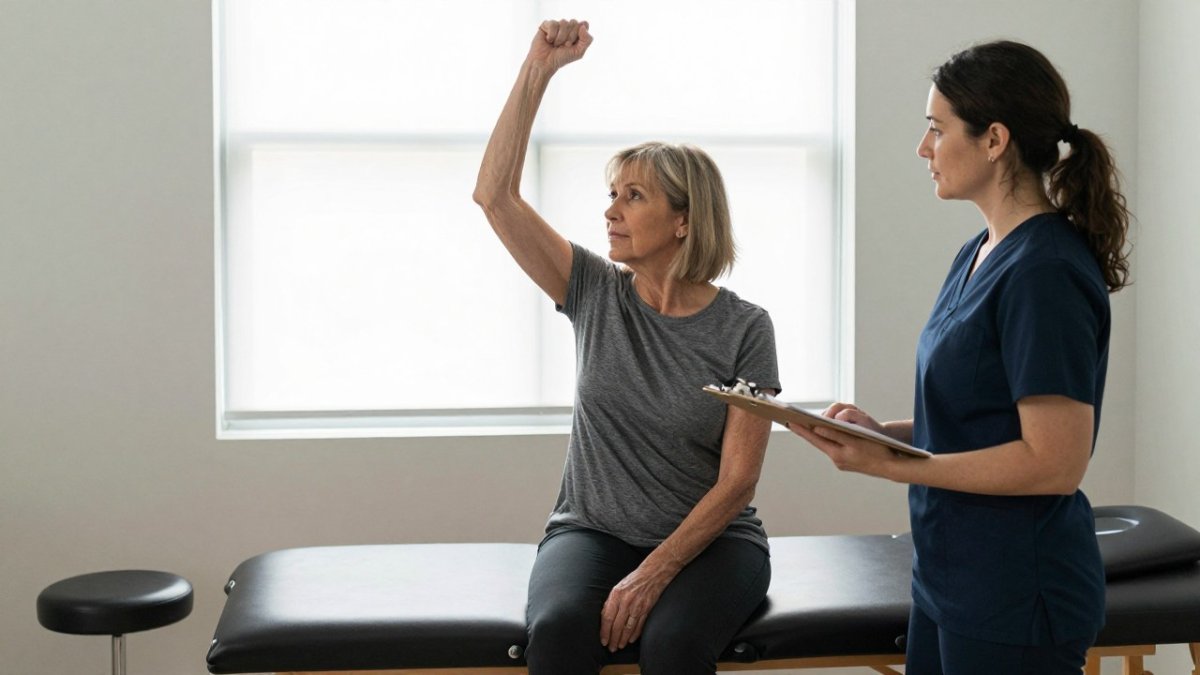
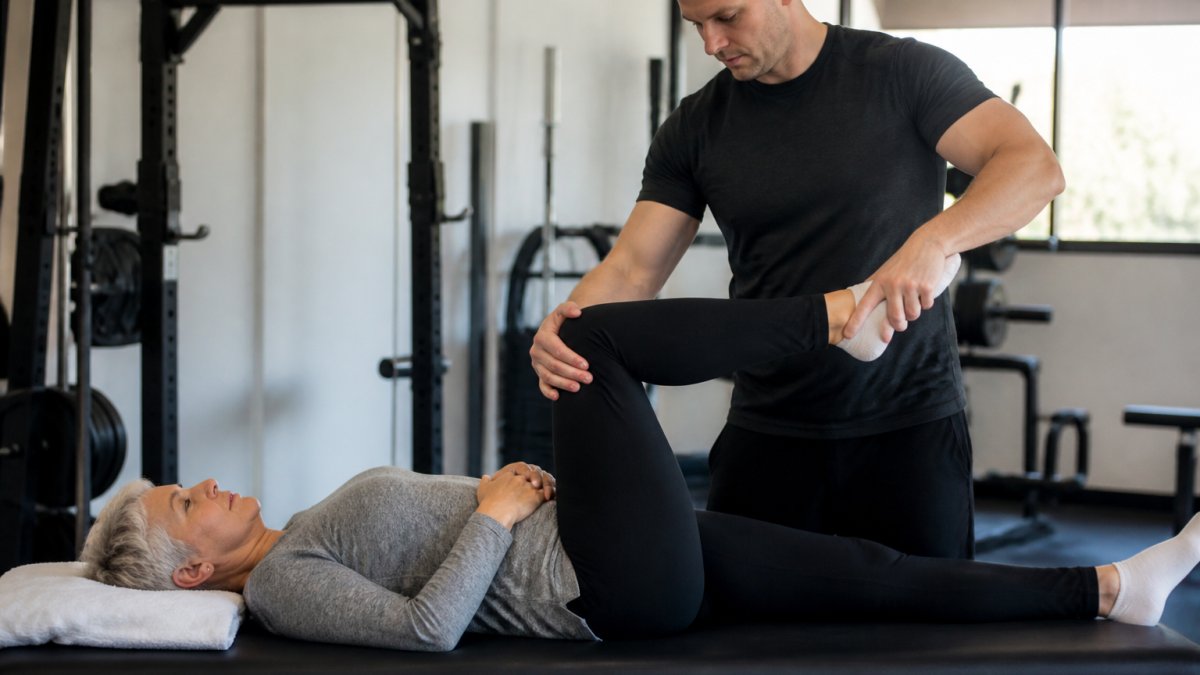
The woman is American.
Chronic Pain Management Without Medication: What the Evidence Supports
Chronic pain management without medication means using movement, hands-on care, and behavioral strategies to reduce pain and improve daily function. The evidence supports several of these approaches, though none works for everyone, and the strength of that evidence varies widely. You can also review ARPWave therapy results for chronic pain to see reported outcomes.
Exercise has the strongest backing. The CDC's guidance on nonopioid pain therapies lists aerobic, aquatic, and resistance exercise among nonopioid options for subacute and chronic pain. A University of Southern California Keck School of Medicine review of noninvasive treatments reported benefits from exercise, low-level laser therapy, spinal manipulation, massage, yoga, and acupuncture. It also noted only small improvements from psychological therapies.
That last point matters. Non-drug care is not a guarantee. Results vary by person and by treatment, and the size of the benefit differs by approach. A useful way to think about it is in tiers:
- Better supported: structured exercise, physical therapy, and graded activity. These have the most consistent evidence for reducing pain and improving function across conditions.
- Modestly supported: massage, acupuncture, yoga, tai chi, and spinal manipulation. Many people get meaningful relief, but effects are often modest and vary by practitioner and condition.
- Small but real: relaxation training, meditation, biofeedback, and cognitive behavioral strategies. The USC review found small improvements, which can still add up when stacked with movement and sleep.
- Uncertain: many supplements, topical products, and devices marketed for pain. Evidence is often mixed or low quality, so treat bold claims with caution.
The NIH News in Health article on chronic pain treatment reports that research has found certain complementary approaches, including acupuncture, massage therapy, and tai chi, reduce pain for some people. "For some people" is the operative phrase.
Watch out: Stopping all movement to "rest" a painful area often makes stiffness and weakness worse. Gentle activity usually serves you better than bed rest, and prolonged inactivity can slow recovery and reduce tolerance for daily tasks.
Condition matters, too. Osteoarthritis often responds well to low-impact aerobic exercise and strength training. Nerve pain may benefit from a different mix, including desensitization techniques and, in some cases, neurostimulation. Chronic headaches often respond to relaxation training, biofeedback, and posture and neck work.
Chronic Pain Physical Therapy Exercises You Can Start This Week
Chronic pain physical therapy exercises are gentle, repeatable movements that build tolerance without triggering a flare. Start with two or three, not ten.
Try this starter sequence:
- Seated marching: sit tall, lift one knee at a time for 30 seconds
- Wall sits: hold 10 to 20 seconds, three rounds
- Heel raises: 10 slow reps while holding a counter
- Shoulder rolls: 10 backward, 10 forward
- Gentle walking: 5 to 10 minutes on flat ground
Do these on good days and hard days alike, adjusting the volume. A physical therapist or qualified clinician can tailor an exercise list to your specific condition.
Both are American.
Chronic Pain Pacing and Activity Management: Doing More Without the Crash
Chronic pain pacing and activity management is the practice of spreading effort across the day so you avoid the boom-and-bust cycle. Most people overdo it on good days, then pay for it for three days.
Pacing rules that work:
- Break tasks into blocks of 15 to 20 minutes
- Stop before the pain peaks, not after
- Alternate heavy and light tasks
- Schedule rest as a task, not a failure
- Keep a daily activity log for two weeks
The log is the useful part. Patterns show up fast, and patterns tell you where to cut back.
How to Control Pain Mentally With Mind-Body Techniques
You can learn how to control pain mentally, though "control" is the wrong frame. Mind-body techniques change your response to pain signals rather than erasing them. The brain plays a real role in how pain is processed.
Options with reasonable support:
- Relaxation breathing: slow exhales for two minutes
- Meditation: 10 minutes daily, guided is fine
- Biofeedback: uses sensors to teach you to relax specific muscles
- Cognitive behavioral strategies: reframing catastrophic thoughts about pain
- Hypnosis: delivered by a trained practitioner
The USC review found psychological therapies produced small improvements. Small is still worth having, especially stacked with movement and sleep.
Heat, Cold, Massage, and Acupuncture: Where Each One Fits
Heat therapy relaxes stiff muscles and is best before activity. Cold therapy numbs acute flare-ups and is best after activity or injury. Use heat for chronic stiffness, cold for a sharp new spike.
Heat is commonly used to ease stiffness before movement. Moist heat from a warm towel or heating pad is a common choice. Check your skin regularly during use.
Watch out: Avoid heat over areas with reduced sensation, such as in diabetic neuropathy, and do not use heating pads while sleeping or on swollen, hot joints. If you have poor circulation or skin that does not feel temperature normally, check with a clinician before regular heat use.
Cold is commonly used for a sharp flare or post-activity soreness. Wrap a cold pack in cloth rather than applying ice directly to skin, and avoid cold over areas with poor circulation.
Massage is often used to ease muscle tension. The NIH reports that massage therapy reduces pain for some people. Avoid deep pressure over acute injuries, inflamed joints, or areas with blood clots, and tell your massage therapist about any medical conditions or medications that affect bleeding.
Acupuncture involves thin needles placed by a trained practitioner. The NIH reports it reduces pain for some people. Choose a licensed practitioner and disclose blood thinners or bleeding disorders, since these affect safety.
Condition-specific fit matters:
- Osteoarthritis: heat before activity and cold after can both help; massage may ease surrounding muscle tension.
- Nerve pain: cold or gentle massage may calm irritated nerves, but deep pressure can worsen symptoms; proceed cautiously.
- Chronic headaches: cold packs on the neck and shoulders and gentle massage are common; acupuncture is also used.
- Back pain: heat before movement and massage for muscle tension are common; cold may help in the first days of a flare.
- Heat: 15 to 20 minutes before your exercise block
- Cold: 10 to 15 minutes after, wrapped in a cloth
- Massage: weekly or as needed for muscle tension
- Acupuncture: a short series, then reassess
If hands-on care is part of your plan, you can explore the massage therapy service we offer and see how a session fits into your week.
Build Your Individualized Plan and Flare-Up Protocol
An individualized plan combines one movement strategy, one recovery strategy, and one mind-body strategy, then adjusts every two weeks. That is it. Complexity kills consistency.
Component | Pick One | Frequency | Measure |
|---|---|---|---|
Movement | Walking, swimming, or PT exercises | 4-5 days a week | Minutes completed |
Recovery | Heat, cold, or massage | As needed | Pain after activity |
Mind-body | Breathing, meditation, or biofeedback | Daily | Sleep quality |
Tracking | Activity log | Daily | Function score |
Your flare-up protocol should be written before the flare happens:
- Drop volume by half, do not stop entirely
- Return to heat or cold that worked before
- Protect sleep for three nights
- Call your clinician if pain changes character or lasts beyond a week
Pairing your plan with an anti-inflammatory eating guide gives you one more lever that costs nothing to try.
Book a Private Assessment to Build Your Pain Plan
Generic plans fail because they ignore your history, your schedule, and your starting point. A private assessment can address that by looking at how you move, what hurts, and what you have already tried, so a plan can be built around you.
Our private, distraction-free sessions are designed for clients who want focused, expert-led support. We also offer ARPwave therapy, HBOT therapy, and active aging programs for clients who want more support.
You do not need to be fit to start. You need a plan that meets you where you are.
Chronic pain rarely resolves on a schedule, and that is frustrating. What you can control is the plan in front of you. Total Body Works Personal Training builds private, one-on-one programs around your function goals, with ARPwave therapy, HBOT therapy, and guided strength work under one roof. Call 7194140482 to book a private assessment and start building a plan that fits your body.
Frequently Asked Questions
Can chronic pain go away without surgery?
For many people, chronic pain does not fully disappear, but it can become far more manageable without surgery. Research summarized by the University of Southern California Keck School of Medicine found benefits from exercise, spinal manipulation, massage, yoga, acupuncture, and low-level laser therapy, with psychological therapies producing smaller improvements. The realistic goal is better function, less frequent flare-ups, and a higher quality of life. A qualified clinician can tell you whether your specific condition is one where non-surgical care is appropriate or whether surgery should stay on the table.
What are common treatments for chronic pain besides surgery?
The CDC lists exercise, including aerobic, aquatic, and resistance training, among nonopioid options for subacute and chronic pain. NIH News in Health reports that acupuncture, massage therapy, and tai chi reduce pain for some people. Physical therapy, pacing, heat and cold therapy, biofeedback, and cognitive behavioral strategies round out the list. These approaches work differently for different conditions, so combining two or three that match your situation usually beats relying on a single method.
How can you manage chronic pain without medication?
Chronic pain management without medication leans on movement, pacing, and mind-body skills. Start with gentle exercise you can repeat consistently, such as walking or swimming, and build slowly. Use pacing to break tasks into short blocks instead of pushing through a whole job at once. Add a relaxation or breathing practice for pain flare-ups. Track what you did and how you felt afterward so you can spot patterns. A trainer or physical therapist can help you set starting loads that match your current capacity rather than your old one.
When should you see a doctor about chronic pain?
See a doctor if pain follows an injury or fall, wakes you at night, comes with numbness, weakness, or loss of bladder or bowel control, or keeps getting worse despite rest. Those signs need a diagnosis before you start an exercise plan. For pain that has lasted more than a few weeks without a clear cause, a medical evaluation establishes what you are working with. Bring that information to your training or therapy sessions so the plan is built around a confirmed diagnosis, not a guess.