 How-to
How to Book Private Personal Training: Step-by-Step
Table of Contents
- Why Booking Private Personal Training Beats a Big Gym Membership
- Step 1: Define Your Fitness Goals Before You Search
- Step 2: Compare In-Home, Gym-Based, and Online Private Personal Training
- Step 3: Book a Personal Trainer Consultation
- Questions to Ask a Personal Trainer Before You Commit
- What to Expect from Your First Personal Training Session
- Personal Training Session Length and Scheduling Logistics
- Personal Training for Couples: Booking a Shared Session
- Frequently Asked Questions
Last Updated: October 21, 2026
Why Booking Private Personal Training Beats a Big Gym Membership
Most people who join a big gym quit going within a few months. The equipment is there, the membership is paid, and the results never come. That gap is exactly why learning how to book private personal training matters more than picking the cheapest gym in town.
At Total Body Works Personal Training, we see the other side of that story every week. People arrive after years of solo gym attempts, frustrated and unsure. A private personal training session changes the math: one coach, one plan, and no distractions.
Here's the core difference. A gym membership sells you access. Private coaching sells you a program built around your body, your goals, and your limits.
- Accountability: someone notices when you skip.
- Form correction: bad reps get fixed before they cause injury.
- Progression: your plan advances as you get stronger.
- Privacy: no waiting for equipment, no audience.
Step 1: Define Your Fitness Goals Before You Search
Write down your goal before you open a single trainer profile. Vague goals produce vague training. A specific goal gives a coach something to build around.
Ask yourself three questions:
- What do I want to change in the next 90 days?
- What has stopped me before?
- What can I realistically commit to each week?
Your answers shape everything that follows. Someone recovering from a shoulder injury needs a different plan than an athlete chasing a faster sprint. Older adults focused on balance and mobility need different work again.
A fitness assessment comes next. Most trainers offer one before you commit. It measures where you are now so you can track real progress later.
Step 2: Compare In-Home, Gym-Based, and Online Private Personal Training
Three formats exist, and each fits a different life. The right choice depends on your schedule, your space, and how much privacy you want.
| Format | Best For | Watch Out For |
|---|---|---|
| In-home training | Busy schedules, privacy | Needs floor space and basic equipment |
| Gym-based training | Access to full equipment | Shared space, less privacy |
| Online training | Travelers, remote clients | Requires self-motivation |
| Private studio | Distraction-free focus | Fewer locations |
In-home training removes the commute. Gym-based sessions give you machines and free weights you may not own. Online coaching works when you travel often.
A private studio sits between them. You get equipment and a coach without the crowded floor.
Many people find a mix works best: studio sessions for form work, online check-ins between visits. Ask each provider how they handle scheduling and cancellations before you decide.
Step 3: Book a Personal Trainer Consultation
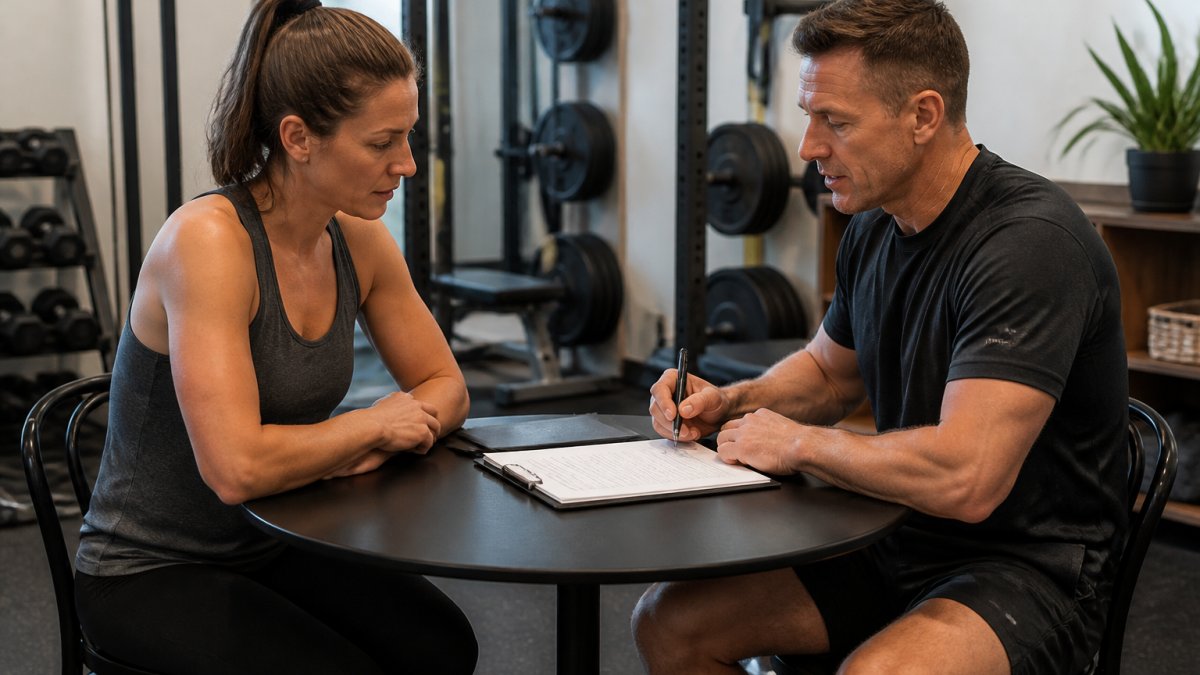
A consultation is the bridge between researching trainers and paying for a session. Treat it as a short, structured meeting with a clear agenda, not a casual chat. The way trainers handle first contact tells you a lot about how they run their business.
How to request the consultation
Use the trainer's preferred contact channel, most list one on their profile or website. Keep your first message short and specific:
- State your goal in one sentence (for example, "I want to squat and deadlift pain-free again after a knee injury").
- Give your realistic weekly availability (days and time windows).
- Mention the format you're considering, in-home, gym-based, private studio, or online.
- Ask for the next available consultation slot and what to bring.
A trainer who replies with a specific time, a clear location or call link, and a short list of what to prepare is organized.
What a good consultation covers
Come prepared with your goal list from Step 1 and any relevant medical history. Mention old injuries, current pain, and medications that affect exercise. Then listen for these five things:
- Assessment plan: how they will measure your starting point before programming.
- Progression logic: how the plan advances week to week and what triggers a change.
- Modification policy: what happens if something hurts during a session.
- Communication norms: how they handle questions between sessions and how quickly they respond.
- Logistics: session length, booking windows, cancellation terms, and payment schedule.
A good trainer talks about assessment, progression, and how they'll adjust if something hurts. A weak one talks only about packages and discounts.
The American Council on Exercise guide to choosing a trainer recommends confirming certifications and asking about scope of practice before you book. That's sound advice, and the consultation is the right place to do it.
Confirm the booking in writing
Before you pay for anything, get the key terms in writing, even if it's just a confirmation email. At minimum, confirm:
- The date, time, and location (or video link) of your first session.
- The session length and the trainer's late-arrival and late-cancellation policy.
- Whether the first session is a trial, an assessment, or a full workout.
- What you should bring or wear.
- The payment method and whether a package or contract is required.
Questions to Ask a Personal Trainer Before You Commit
Most trainer-selection articles hand you a list of questions and stop there. The harder part is knowing what a good answer sounds like and how to verify it. Use this section as a screening checklist: ask the question, listen for the specific answer, then confirm the claim independently where you can.
Credentials and safety
- "What certifications do you hold, and are they current?" Look for a nationally recognized certification with a current expiration date. Ask for the certifying body's name, not just "I'm certified." You can usually verify a certification through the issuing organization's public directory.
- "Do you carry professional liability insurance?"
- "How do you screen for injuries before training begins?"
- "What happens if I feel pain during a session?"
Programming and progress
- "How do you track progress between sessions?" Specific answers include a training log, periodic re-testing, or measurable benchmarks. Vague answers are a warning sign.
- "How do you adjust a program for someone at my level?" The trainer should describe regressions and progressions for the main lifts, not just say they'll "scale it."
- "What does a typical session look like from warm-up to cooldown?" This tells you whether the session is structured or improvised.
Business terms
- "Do you offer a trial session before I buy a package?"
- "What's your cancellation and rescheduling policy?" Get the exact window, for example, 24 hours, and whether late cancellations are charged.
- "Can I pause a package during travel or illness?" Important if your schedule is irregular.
- "How are payments handled, and is there a contract?" Ask for the terms in writing before you pay.
How to verify the answers
- Check the certifying organization's public directory for the trainer's name and certification status.
- Ask for two client references and actually call them, ask how the trainer handled a missed session or an injury flare-up.
- Search the trainer's name and business name for reviews and complaints.
The CDC's physical activity guidance is clear that activity should match a person's current fitness level. A good coach builds from there.
What to Expect from Your First Personal Training Session
Your first session is mostly assessment. Expect a conversation, some movement screening, and a light workout to see how you move.
Here's the typical shape:
- Health and goals review
- Movement and mobility screening
- Baseline strength or endurance tests
- A short introductory workout
- A plan discussion for the weeks ahead
You should leave knowing what comes next. You should also leave feeling worked but not wrecked.
A fitness assessment during session one sets your starting point. From there, your training plan should progress in steps you can measure.
Personal Training Session Length and Scheduling Logistics
Most private personal training sessions run 45 to 60 minutes. That's long enough for a proper warm-up, focused work, and a cooldown.
Personal training session length can vary by format. A quick in-home session may run 30 minutes. A session that includes therapy work can run longer. Ask before you book so your calendar matches reality.
Scheduling logistics matter as much as the workout. Confirm these before you commit:
- How far ahead do you book sessions?
- What's the late cancellation window?
- Can you pause a package during travel or illness?
- Are evening and early morning slots available?
- How are payments handled, and is there a contract?
Busy professionals should ask about flexibility up front. The U.S. Department of Health and Human Services physical activity guidelines recommend regular activity across the week, which makes a reliable schedule part of the plan, not an afterthought.
Personal Training for Couples: Booking a Shared Session
Personal training for couples works when both people share a goal and a schedule. It's not a gimmick. Two people training together keep each other accountable, and one coach can program for both.
Book it the same way you'd book solo training:
- Confirm you both want the same format (in-home, studio, or online).
- Ask whether the trainer programs individually within the shared session.
- Confirm the cancellation policy covers both people.
Shared sessions work best when both partners have similar starting points. If one is recovering from injury and the other is training for performance, separate sessions may serve you better.
At Total Body Works Personal Training, couples training is a core service, run in a private setting with no distractions.
Frequently Asked Questions
How long is a private personal training session?
Most private personal training sessions run 45 to 60 minutes, though some studios offer 30-minute express sessions or 90-minute assessments. Ask about personal training session length when you book a consultation so you can plan your schedule. The right length depends on your goals, current fitness level, and whether the session includes a warm-up, workout, and cool-down. Confirm the duration and any setup time before your first appointment.
What should I ask before booking a personal trainer?
Ask about certifications, years of experience, and how the trainer builds workout programs for clients with your goals or injuries. Inquire about the personal trainer consultation process, session length, cancellation policies, and how progress is tracked. These questions to ask a personal trainer help you compare options and confirm the coach-client fit before you commit to a session package.
What should I expect at my first private personal training session?
Expect a fitness assessment, a conversation about your goals and health history, and a workout tailored to your current level. The trainer may check movement patterns and discuss any pain or injuries. Bring comfortable clothes, water, and any relevant medical information. A good first session ends with a clear training plan and next steps. Ask how the trainer will adjust the workout program as you progress.
Is personal training for couples effective?
Personal training for couples can be effective when both partners share similar goals and the trainer balances different fitness levels. Sessions often include partner exercises, accountability, and shared warm-ups. Couples training works best when each person still receives individual attention and modifications. Ask the trainer how they structure shared sessions and whether they recommend separate assessments first. Many couples find the accountability helps them stay consistent.
Booking private personal training comes down to preparation. Define your goal, compare the formats, ask hard questions, and confirm the logistics before you pay. At Total Body Works Personal Training, we offer distraction-free private sessions, couples training, and specialized therapies like ARPwave and HBOT to support recovery and performance. Call 7194140482 to schedule a consultation and start with a plan built for you.