 How-to
Strength Training Programs for Seniors: A Step-by-Step Plan
Quick Summary
Strength training programs for seniors are simple, consistent routines that build muscle to help older adults keep their independence and balance. The CDC recommends muscle-strengthening activities on at least 2 days per week for adults 65 and older. A gradual four-week plan using a sturdy chair and light resistance can make a safe start.
- The CDC recommends muscle-strengthening activities for adults 65 and older on at least 2 days per week.
- Strength work supports daily tasks like climbing stairs, carrying groceries, and rising from a chair.
- The four-week plan starts with 1 set of 8 repetitions and builds to 3 sets of 10-12.
- Stop immediately for sharp pain, chest tightness, or lightheadedness, and consult a doctor first if you have a heart condition.
Table of Contents
- Why Strength Training Programs Matter for Seniors
- Strength Training Programs for Seniors at Home: Getting Started
- A Step-by-Step Strength Training Routine for Seniors
- Strength Training for Seniors Over 70: Adapting the Program
- Safety Guidelines: Pain, Fatigue and When to Stop
- Free and Downloadable Strength Training Programs for Seniors
- Booking Your First Supervised Session at Total Body Works Personal Training
- Frequently Asked Questions
Why Strength Training Programs Matter for Seniors
Last Updated: November 19, 2026
Strength training programs for seniors do more than build muscle. The Centers for Disease Control and Prevention (CDC) recommends that adults 65 and older do muscle-strengthening activities on at least 2 days per week. CDC guidance on physical activity for older adults
Strength work supports the things people do every day, like climbing stairs, carrying groceries, and getting up from a chair.
Strength training also helps with balance. A small study published through PubMed Central looked at a 12-week strength-training program for older adults living in care facilities and measured its effect on physical fitness. study on a 12-week strength training program in institutionalized older adults
Research from Penn State reported that a short daily strengthening workout improved strength and balance in older adults. Penn State report on a four-minute daily workout for strength and balance
Here is what strength training typically helps with:
- Getting up from a chair or the floor
- Climbing stairs with less effort
- Carrying groceries and laundry
Strength training is not a cure for age-related changes. For broader local resources and tips on staying active as you age in Colorado Springs, see our active aging guide.
Strength Training Programs for Seniors at Home: Getting Started
Starting a home program works best when it is simple and consistent. Pick a sturdy chair, a clear floor space, and a few light tools like a resistance band or hand weights.
A good first week often includes:
- Chair squats or sit-to-stands
- Wall push-ups
- Seated leg extensions
Keep your early effort easy, so you can still talk while you exercise. If a movement causes sharp pain, stop and try a gentler version.
At Total Body Works Personal Training, our small group classes are capped at 4-6 people, with a coach guiding every session. Adults 40 and older who want group support as an alternative to training alone can see our small group personal training option.
A Step-by-Step Strength Training Routine for Seniors
This four-week plan is a true program, not just a list of exercises. It progresses gradually, includes built-in recovery, and offers substitutions so you can adapt each movement to your ability. Follow the plan in order, and repeat the four-week cycle at a higher resistance or with more repetitions as you get stronger. To learn how long it typically takes to notice changes from consistent strength work, read how long until you see results.
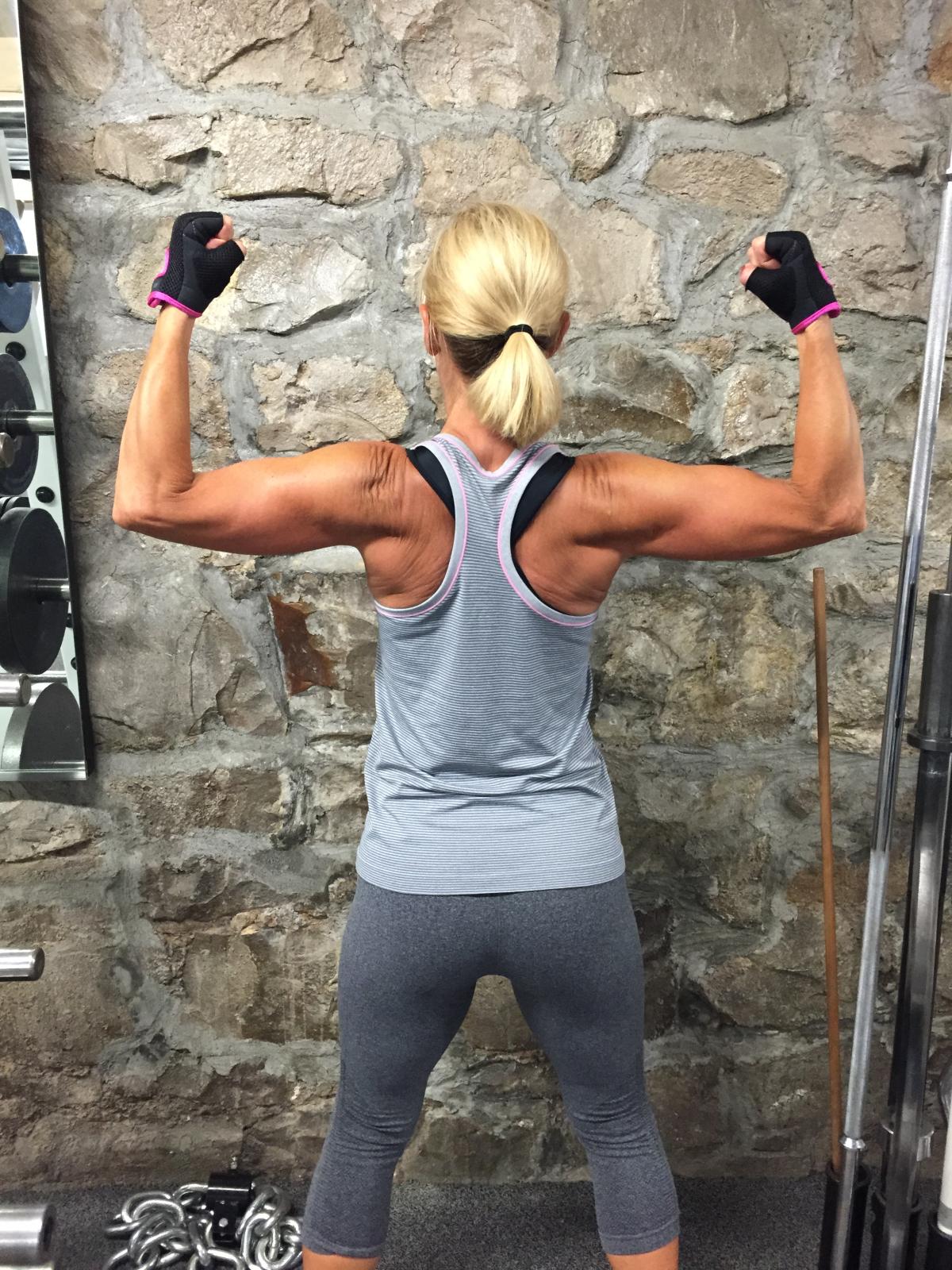
Week 1: Foundation and Form
Perform this workout twice this week, with at least one rest day between sessions. Use a sturdy chair, a clear wall space, and a light resistance band or no weight at all.
- Sit-to-stand: Stand up from a chair without using your hands, then sit back down slowly. Do 1 set of 8 repetitions.
- Wall push-up: Place hands on the wall at shoulder height, step back, and bend elbows to bring chest toward the wall. Do 1 set of 8 repetitions.
- Seated leg extension: Sit tall, straighten one knee, hold for two seconds, and lower. Do 1 set of 8 repetitions per leg.
After each session, note how you felt. You should finish feeling as though you could have done a few more repetitions. If you feel exhausted or sore for more than a day, reduce the repetitions next time.
Week 2: Adding Volume
This week, add one set to each exercise, for a total of 2 sets, keeping the same repetitions. If you feel ready, add a light band or a 1-2 pound weight to the seated row and shoulder blade squeeze.
- Sit-to-stand: 2 sets of 8 repetitions
- Wall push-up: 2 sets of 8 repetitions
- Seated leg extension: 2 sets of 8 repetitions per leg
If you feel sharp pain in a joint, stop that exercise and substitute a gentler version from the list below. Do not push through joint pain.
Week 3: Building Consistency
Continue with 2 sets, but aim to add 2 repetitions to each set, if you did 8 sit-to-stands, try for 10. This is also a good week to add a third session if you feel recovered between workouts. Three sessions per week is a common target for older adults, but two is still effective.
- Sit-to-stand: 2 sets of 10 repetitions
- Wall push-up: 2 sets of 10 repetitions
- Seated leg extension: 2 sets of 10 repetitions per leg
Week 4: Progression and Recovery
This week, aim for 3 sets of 10-12 repetitions for each exercise. If you are fatigued, take an extra rest day between sessions, recovery is part of the program. At the end of this week, repeat the cycle with a stronger band, a slightly heavier weight, or a more challenging variation.
Exercise Substitutions and Regressions
Every movement can be adjusted based on your balance, pain, strength, and available equipment.
- Sit-to-stand: If standing from a chair is difficult, place your hands on the chair arms or a counter for support. If it is too easy, hold a light weight across your chest.
- Wall push-up: For more challenge, move your feet farther from the wall. For less, stand closer. If wall push-ups are too easy, try an incline push-up on a sturdy counter.
- Seated leg extension: If you have knee pain, reduce the range of motion or do the movement with a pillow under your knee. If you have no band, simply straighten and hold.
How to Measure Progress
Do not rely on the scale or vague feelings. Track these concrete markers each week:
- Repetitions and sets: Record exactly what you completed. Aim to increase repetitions or sets gradually.
- Resistance level: Note the band color or weight used. Moving to a stronger band is a clear sign of progress.
- Perceived effort: Use a simple scale of easy, moderate, or hard. You want most sets to feel moderate by the end of the week.
If you miss a week, do not start over. Repeat the last week you completed and then continue. Consistency over months matters more than any single session.
Strength Training for Seniors Over 70: Adapting the Program
Adults over 70 can still build strength, but the routine often needs more adjustment.
Consider these changes:
- Start with one set and build slowly over several weeks
- Use a wall or sturdy counter for support during standing exercises
- Choose seated versions of movements that feel unstable
Some older adults prefer a trainer who has experience with their age group. Total Body Works Personal Training offers a dedicated resource on finding a senior personal trainer in Colorado Springs, which explains what to look for in a coach. Read our senior personal trainer guide
Safety Guidelines: Pain, Fatigue and When to Stop
Strength training should feel challenging, not threatening. Use this guide to tell the difference between normal effort and a signal to stop.
Expected Exertion vs. Warning Signs
Use this table to check in with yourself during and after each session.
What you might feel | Normal effort (keep going) | Warning sign (stop and assess) |
|---|---|---|
Muscle sensation | Burning or warmth in the muscle during the last few repetitions | Sharp, stabbing, or tearing pain |
Breathing | Faster but you can still talk in short sentences | Cannot catch your breath, or chest tightness |
Joints | Mild pressure or stiffness that fades after a few repetitions | Joint pain that worsens with movement or persists after rest |
Fatigue | Tired muscles that recover within an hour | Unusual exhaustion that lasts into the next day |
Dizziness | None | Lightheadedness, nausea, or blurred vision |
If you experience any warning sign, stop the exercise immediately. Sit down, rest, and if the symptom does not resolve quickly, contact a healthcare provider. Chest pain, pressure, or unusual shortness of breath warrants urgent medical attention.
Fatigue Management and Recovery
Muscles adapt during rest, not during the workout. Feeling more tired in the first two weeks of a new program is normal. However, persistent fatigue that makes daily activities harder is a sign you need more rest.
- Rest between sessions: Allow at least one full day between full-body strength sessions. If you feel sore for more than two days, take an extra rest day.
- Sleep: Aim for 7-9 hours of sleep per night. Poor sleep slows recovery and increases injury risk.
- Hydration: Drink water before, during, and after exercise. Dehydration can cause dizziness and muscle cramps.
Breathing and Blood Pressure
Holding your breath during a lift can spike blood pressure. Breathe out during the hardest part of the movement and breathe in as you return to the start. If you have high blood pressure, avoid holding your breath and consider checking your blood pressure before and after exercise for the first few weeks.
When to Consult a Clinician Before Starting
Talk with a doctor before beginning any new strength program if you have:
- A heart condition or have had a heart attack
- Uncontrolled high blood pressure
- Joint problems that limit movement
Your doctor can help you modify the program or refer you to a physical therapist who can design a safe plan. If you experience any new pain or symptom that concerns you, stop and seek advice.
Adherence: Building a Routine That Lasts
The best program is the one you actually do. Strategies that help include scheduling sessions at the same time each week, exercising with a friend or group, and keeping your equipment visible. Total Body Works Personal Training offers small group classes capped at 4-6 people, which provides accountability and coaching. If you prefer one-on-one guidance, our private sessions are designed around your goals and limitations. Visit our personal training page to learn more.
Free and Downloadable Strength Training Programs for Seniors
Many free programs are available from health organizations, community centers, and senior fitness programs. When you choose one, look for clear instructions, safety notes, and a gradual progression plan.
Check the source before you download. The CDC's older adult activity guidance is a good starting point for general recommendations. CDC older adult activity overview
Printed or PDF programs work well when you pair them with the tracking log described above.
Booking Your First Supervised Session at Total Body Works Personal Training
A supervised session helps you learn correct form from the start, so you can build strength with less guesswork and less risk.
Total Body Works Personal Training offers distraction-free private sessions. To learn what a session involves and how to get started, visit our personal training page.
Ready to build a routine that fits your body? Call Total Body Works Personal Training at 719-414-0482 to schedule your first session.
Frequently Asked Questions
What is the best strength training program for seniors?
The best program is one built around the major muscle groups, performed two or more days per week, and adjusted to the person's fitness level. The CDC recommends muscle-strengthening activities on at least 2 days per week for adults 65 and older. A well-designed program uses an individualized, progressive approach, starting with bodyweight, chair-supported or light-resistance exercises, then gradually increasing difficulty as strength improves. Because needs vary with health conditions and injuries, a qualified professional can help tailor the plan.
How often should seniors do strength training?
The CDC recommends that adults 65 and older do muscle-strengthening activities on at least 2 days per week, working all major muscle groups. Many older adults start with two non-consecutive sessions and add more over time as tolerated. Rest days between sessions allow muscles to recover. Anyone with a health condition or recent injury should check with their doctor before changing how often they train.
Can seniors build strength with exercises at home?
Yes. Home programs can use bodyweight movements such as wall push-ups, sit-to-stands, and heel raises, along with resistance bands or light hand weights. Sturdy chairs provide support for beginners. The key is progressive overload: gradually increasing repetitions, sets, or resistance so the muscles keep adapting. Home workouts work well for many people, though a supervised session can help with form and safety.
Should a 70-year-old do strength training?
Yes, strength training is generally appropriate for adults in their 70s, and it supports everyday tasks such as climbing stairs, carrying groceries, and getting up from a chair. Starting levels and safe exercise choices depend on individual health, medications, and past injuries. Anyone with heart, joint, or balance concerns should consult a healthcare provider before beginning. Starting slowly and using supported positions reduces the risk of strain.