 comparison
Why Private Training Is Worth the Cost: 2026 Guide
Table of Contents
- Why Private Training Is Worth the Cost: A Straight Answer
- What Drives the Cost of Private Training
- Private Personal Training Benefits You Actually Feel
- Private Training vs. Big Gym: What the Membership Does Not Cover
- How to Choose a Personal Trainer Who Fits Your Goals
- Personal Training for Active Aging and Injury Recovery
- Alternatives and Hybrid Approaches to Private Training
- Conclusion: Deciding If Private Training Is Worth It for You
- Frequently Asked Questions
Last Updated: October 8, 2026
Why Private Training Is Worth the Cost: A Straight Answer
Private training is worth the cost when the alternative has already failed you. At Total Body Works Personal Training, we hear the same story from clients who have tried big-box gyms, group classes, and solo workout plans before walking through our door. (Source: studies on exercise adherence)
Below, we break down what actually drives the price of private training, what you get for it, and how to decide whether it makes sense for you. We will also show you when it does not, because a trainer who tells you everyone needs one-on-one coaching is selling, not advising.
What Drives the Cost of Private Training
Private training costs more than a gym membership because you are paying for a person's time, attention, and expertise, not access to equipment. Four factors move the number up or down: who is coaching you, where they work, how the business is structured, and how often you book.
Trainer Experience and Certifications
A trainer with a national certification and years of hands-on work with clients charges more than someone newly certified. Specialized skills raise the rate further. A coach who understands shoulder rehabilitation, joint pain in older adults, or sport-specific programming brings knowledge a generalist does not. That gap shows up in your results, especially if you are recovering from an injury or managing a chronic condition.
Business Model and Location
A large gym spreads its costs across thousands of members and pays trainers a share of each session. A private studio carries its own rent, equipment, and staff on far fewer clients, which raises the per-session rate. You are also paying for privacy: no waiting for racks, no crowd, no distractions. For clients in the Colorado Springs and Monument areas, that trade-off is often the deciding factor.
Private Personal Training Benefits You Actually Feel
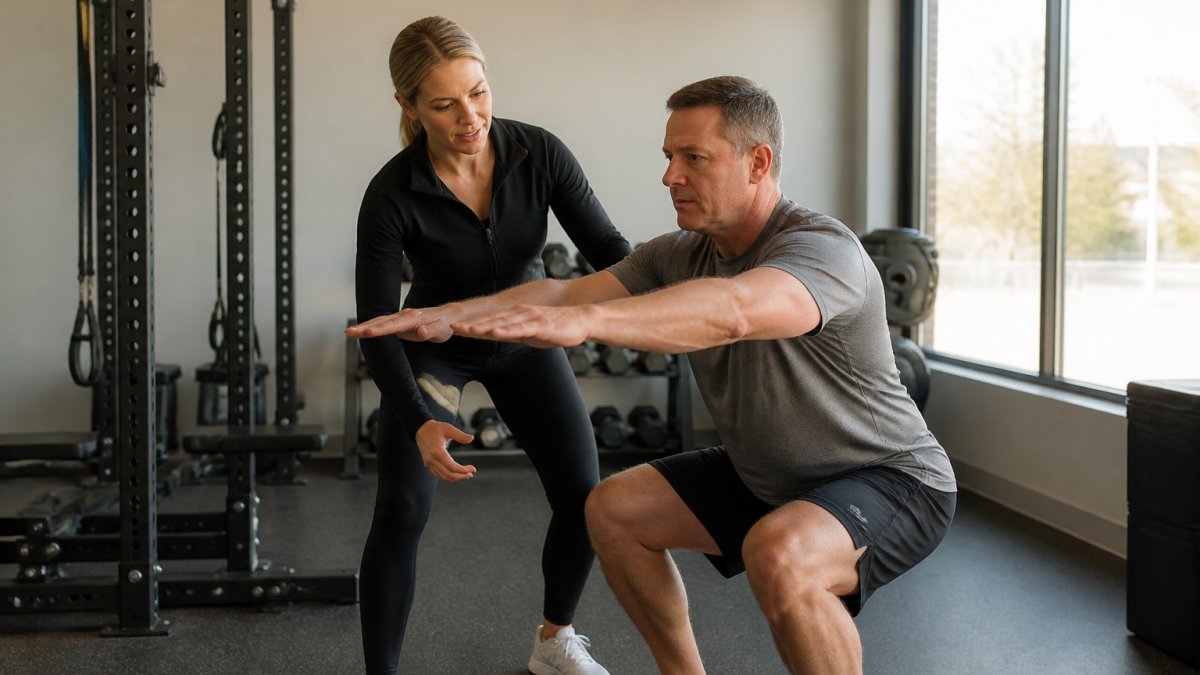
The benefits of private personal training show up in places a group class cannot reach: your consistency, your technique, and how your body feels between sessions. These are not abstract perks. They are the reasons people stay with it long after a gym membership would have lapsed.
Accountability That Keeps You Consistent
Consistency is the hardest part of any fitness routine, and it is the first thing to collapse when life gets busy. A scheduled session with a real person changes the math. You show up because someone is expecting you, and because you paid for the hour. Over months, that structure builds a habit that self-guided workouts rarely create on their own.
Customized Fitness Plans Built Around Your Goals
A customized fitness plan starts with your body, your history, and your goal, not a template. A trainer watches how you move, adjusts the load, and changes the programming as you progress. If your knee flares up, the plan changes that day. If you are training for a specific sport or recovering from a shoulder injury, the plan is built around that, not around what works for the average person.
Private Training vs. Big Gym: What the Membership Does Not Cover
A gym membership buys access. It does not buy guidance, and that distinction explains most of the price gap. When you join a big gym, you get equipment, a locker room, and maybe a free orientation session. What you do not get is someone watching your form, correcting your movement, and adjusting your plan week to week.
But the honest comparison is not "gym versus private training." It is a spectrum of formats, each with a different cost structure and a different amount of coaching built in. Here is how the common options stack up on what you actually receive:
Format | Typical Structure | Coaching Depth | Accountability | Relative Cost |
|---|---|---|---|---|
Self-guided gym membership | Open access, you program yourself | None | None | Lowest |
Online coaching | App-based plan, periodic check-ins | Moderate, remote | Moderate | Low to moderate |
Small-group training | 3-8 people, shared coach | Moderate, split attention | Moderate to high | Moderate |
Couples / partner training | 2 people, one coach | High, shared | High | Moderate to high |
One-on-one private training | Single client, dedicated coach | Highest | Highest | Highest |
Two things drive the price difference more than anything else: how much of a trained professional's attention you are buying, and how many people split that attention. A small-group session might cost a fraction of a private session because the coach's hour is divided among several clients.
The Math Most People Skip
The sticker price of a membership is not the real cost. The real cost is the price divided by the number of times you actually use it.
This is the trade-off worth weighing. The membership is cheaper on paper. The question is whether it gets you to your goal. For people who already know how to train and stay motivated on their own, it does.
If cost is the main barrier, you do not have to choose between full private training and nothing.
How to Choose a Personal Trainer Who Fits Your Goals
Choosing a personal trainer comes down to three checks: credentials, specialty, and fit. Get those right and the rest tends to work itself out. Get them wrong and you will pay for sessions that never quite address your situation. Most competitors stop at "look for a certification." The useful version is a set of questions you can ask before you spend a dollar.
Credentials and Scope
Look for a current certification from a nationally recognized body, and confirm it is active, certifications require continuing education to stay valid. Ask what the trainer's certification actually qualifies them to do. A general personal training credential covers exercise programming for apparently healthy adults.
If you have a medical history, a prior injury, a chronic condition, a recent surgery, ask directly how the trainer handles it. A strong answer names specific precautions, a plan to work around the issue rather than through it, and a willingness to coordinate with your physician or physical therapist.
Specialty Match
A trainer who works with competitive athletes may not be the right fit for active aging or injury recovery, and vice versa. Match the specialty to your goal, not to the trainer's marketing. Ask for examples: what does a typical client in your situation look like, and what does their first month look like?
The Questions to Ask Before You Commit
- Assessment: How do you evaluate a new client before writing a plan? A real assessment includes movement screening and a goal conversation, not just a sales pitch.
- Programming: How often do you change the plan, and what triggers a change? Progress should be tracked and programming adjusted on a schedule, not left static for months.
- Progress tracking: How will I know I am improving? Look for concrete markers, strength numbers, measurements, movement quality, adherence, not just how you feel.
- Communication: How do you prefer to be reached between sessions, and how quickly do you respond?
- Cancellation and rescheduling: What is the notice window, and what happens if I miss a session? Get this in writing before you pay.
- Package terms: Are sessions sold individually or in packages, and do they expire? Understand the commitment before you sign.
- Trial session: Book one session before committing to a package. You will learn more in an hour than in any consultation.
Red Flags
Be cautious if a trainer guarantees a specific amount of weight loss, pushes supplements or products you did not ask about, will not explain the reasoning behind an exercise, or pressures you to buy a large package before you have trained together once. None of those are signs of good coaching.
What Good Progress Looks Like
Results depend on attendance, effort, health, and trainer fit, no trainer can promise an outcome, and anyone who does is overselling. What a good trainer can promise is a structured process: a plan built around your starting point, programming that adapts as you improve, and honest feedback on what is and is not working. Judge the process, and the results tend to follow.
Personal Training for Active Aging and Injury Recovery
Personal training for active aging is less about building muscle and more about protecting independence. Balance, mobility, and joint health matter more after 50 than raw strength, and those qualities respond well to supervised, progressive training. A private setting also removes the intimidation many older adults feel on a crowded gym floor.
For clients managing chronic pain or recovering from an injury, the value shifts again. The goal is not to push through pain but to rebuild capacity without setting recovery back. This is where specialized therapies can play a role.
Alternatives and Hybrid Approaches to Private Training
Private training is not the only path, and a hybrid approach often delivers the best value. If cost is the main concern, you can combine occasional private sessions with self-guided workouts. Use the trainer to build your plan, teach your form, and check in monthly, then train on your own in between.
Couples training is another option worth considering. Two people share a session, which lowers the per-person cost while keeping the coaching and accountability. It works best when both partners have similar goals or are willing to follow the same session structure.
The right choice depends on your budget, your goal, and how much structure you need to stay consistent.
Conclusion: Deciding If Private Training Is Worth It for You
The honest answer is that private training pays off for people who need guidance, accountability, or a plan built around a specific body and goal. If you have tried gyms and solo routines and they have not stuck, the missing piece was probably never willpower. It was coaching.
At Total Body Works Personal Training, we offer distraction-free private sessions, couples training, and specialized therapies like ARPwave and HBOT in a private, professional environment. If you are in the Colorado Springs or Monument area and want to know whether private training fits your situation, call 719-414-0482 and we will walk you through it.
Frequently Asked Questions
Is private training worth it?
It depends on your goals and how you value accountability and expert guidance. Private training is worth it if you need customized programming, consistent motivation, and exercise form correction that a general gym membership cannot provide. If you are self-motivated and comfortable building your own routine, a gym membership may be enough. The right answer comes from comparing what you actually get for the cost.
Why does personal training cost so much?
The session rate reflects the trainer's time, certifications, and the one-on-one attention you receive. Unlike a gym membership shared among hundreds of people, private training gives you undivided focus for the full session. Trainer experience, location, and business model also affect pricing. When you divide the cost by the hour of dedicated coaching, the rate often makes more sense than it first appears.
How is private personal training different from training at a big gym?
A big gym provides equipment and space but no instruction. Private training adds a customized fitness plan, real-time exercise technique correction, and accountability that keeps you showing up. You also avoid crowds, waiting for machines, and the distraction of a busy floor. For people with specific goals like injury recovery or active aging, that structure makes a measurable difference.
What should I look for when choosing a personal trainer?
Look for relevant certifications, experience with your specific goals, and a training style that matches how you learn. Ask about their approach to programming, how they track progress, and whether they have worked with clients in your situation. A good trainer will explain their methods clearly and adjust the plan as you improve. Do not be afraid to ask for references or a trial session.